The inquiry into historic allegations of child sexual abuse
suffers from an “inherent problem” because its scope is too large, its
former chair has said.
Justice Lowell Goddard, who resigned in August, submitted a memo to the Home Affairs Select Committee setting out what she saw as the problems with the inquiry.
“It is clear there is an inherent problem in the sheer scale and size
of the inquiry (which its budget does not match) and therefore in its
manageability,” she said.
“Its boundless compass, including as it does, every state and
non-state institution, as well as relevant institutional contexts,
coupled with the absence of any built-in time parameters, does not fit
comfortably or practically within the single inquiry model in which it
currently resides. Nor is delivery on the limitless extent of all of the
aspirations in its terms of reference possible in any cohesive or
comprehensive manner.”
Justice Goddard said her departure should be an opportunity for a
review of the inquiry. She added that after the inquiry was
reconstituted under her leadership, it “proved in operational terms not
to be a new inquiry with a completely fresh start, but rather a
continuation and expansion of the previously existing inquiry in terms
of its administration and management”.
The former chair said she was not consulted in the recruitment of
additional staff for the new inquiry and some of the staff were
unsuitable because they had no previous experience of running an inquiry
of this kind. She also said that the inquiry’s public communications
strategy needs to be “radically strengthened” in the future.
The inquiry suffered a further blow after victims’ groups threatened
to boycott it. Raymond Stevenson, of the Shirley Oaks’ Survivors
Association, said there was no guarantee that the inquiry’s
investigation into the treatment of children in care in Lambeth was
“truly independent” because the Home Office were heavily involved in
both this inquiry and previous investigations.
John McCabe, a spokesperson for victims of alleged abuse at Medomsley
detention centre, said he was urging victims and their lawyers to
boycott the inquiry because it was not taking evidence from victims who
were abused over the age of 18.
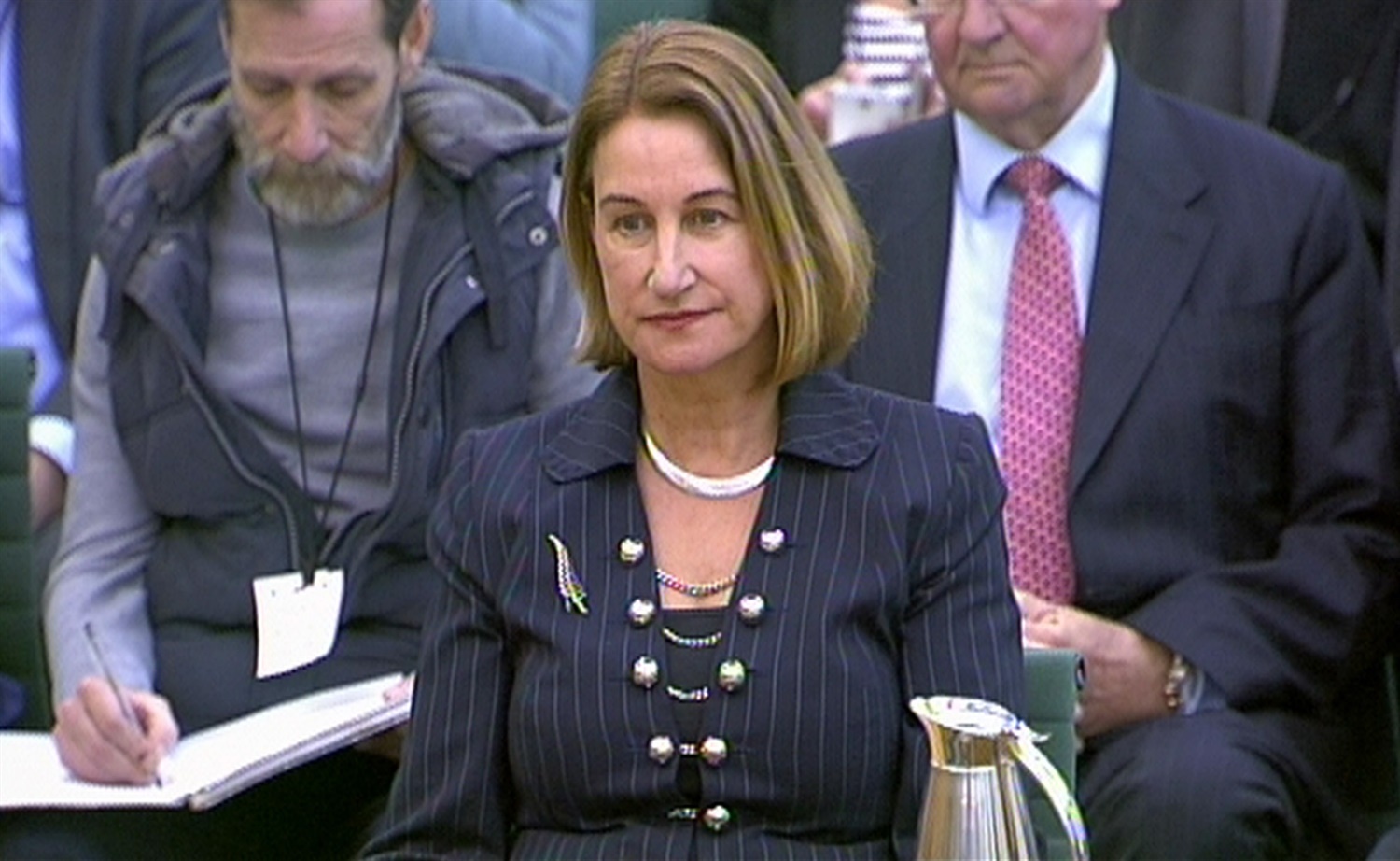
Lowell Goddard, who resigned as head of the independent inquiry into
child sexual abuse in August, suggested that it should be remodelled to
focus it ‘more towards current events and thus focusing major attention
on the present and future protection of children’.
Photograph: Ben Pruchnie/Getty Images
Almost three years ago I was asked by Durham constabulary to advise
on detention centre regimes as background to an investigation of
allegations of abuse at HM detention centre Medomsley. Its work was
later taken over by the independent inquiry into child sexual abuse. Now we learn (Victims threatening boycott of child abuse inquiry,
9 September) that the inquiry’s terms of reference preclude them from
hearing evidence from those who were 18 or over at the time, though it
will consider behaviour commencing before the age of 18.
Until 1970 the age of majority in the UK was set at 21. Medomsley was
classified as a senior detention centre and thus held those between the
ages of 17 and 21, all of them children as the law then stood.
Medomsley opened in 1961, so the inquiry’s terms of reference will
preclude about nine years’ worth of serious allegations, except for
those made by a few former trainees at the very lowest end of the age
scale.
Almost three years ago I was asked by Durham constabulary to advise
on detention centre regimes as background to an investigation of
allegations of abuse at HM detention centre Medomsley. Its work was
later taken over by the independent inquiry into child sexual abuse. Now we learn (Victims threatening boycott of child abuse inquiry,
9 September) that the inquiry’s terms of reference preclude them from
hearing evidence from those who were 18 or over at the time, though it
will consider behaviour commencing before the age of 18.
Until 1970 the age of majority in the UK was set at 21. Medomsley was
classified as a senior detention centre and thus held those between the
ages of 17 and 21, all of them children as the law then stood.
Medomsley opened in 1961, so the inquiry’s terms of reference will
preclude about nine years’ worth of serious allegations, except for
those made by a few former trainees at the very lowest end of the age
scale.
A Durham team was sensitively handling very many serious
allegations and had worked hard to gain the confidence of former
trainees. Now, three years on, the latter are to be given a metaphorical
slap in the face. The inquiry’s terms of reference should be amended so
as to avoid inflicting another form of abuse upon those traumatised
individuals who seemingly misplaced their trust in the system by coming
forward in the first place. Peter Quinn (Former prison governor) Helperby, North Yorkshire
• Lowell Goddard makes a plea for the
independent inquiry into sex abuse to focus on the future protection of
children vulnerable to abuse, while Eric Allison and Simon Hattenstone
argue passionately for those previously abused while in the care of the
state to be heard. While it may be that such unchecked, terrible abuse
in a state institution is a thing of the past, the attitude to the “bad”
boys and girls in our custodial institutions has changed little over
the years.
Where was the public outrage following the Panorama programme
earlier this year about the treatment of children in a secure training
centre? And why, despite a change in management and reassurances from
government, did the recent inspection report on the same centre still
express grave concerns? Children in custody, whatever crime they have
committed, are in the care of the state, and the state has a duty to
treat them with respect; it is only a small step from lack of care and
respect to actual abuse. The lack of concern for and interest in these
children may create a climate where such abuse is not only a thing of
history. Pam Hibbert Llangammarch Wells, Powys
The historic abuse inquiry won’t listen to those who suffered if they
were over 18 at the time. But they were vulnerable, traumatised, and
their lives ruined
Lowell Goddard, who resigned last month as chair of the independent inquiry into child sexual abuse.
Photograph: Ben Pruchnie/Getty Images
Even the fiercest critic of Dame Lowell Goddard must admit she’s got a point. Earlier this week, Goddard revealed why she resigned last month
as chair of the independent inquiry into child sexual abuse. She sent a
10-page critique of the setup of the inquiry to the home affairs select
committee, saying it was too big, took in too many institutions
(church, councils, schools, Westminster, Medomsley detention centre
– to name but a few of its 13 strands), was too complex, went back too
far (60 years), would take too long (possibly 10 years), and was
underfunded.
Many commentators have been too busy sniping at the New Zealand judge’s annual financial package of £500,000,
her apparent failure to grasp key legal issues, the amount of time she
has spent overseas in the past year, and the lack of progress, to
acknowledge the one crucial fact: Goddard is right.
It was to widespread approval that Theresa May, then home secretary,
announced the launch of the public inquiry in 2014. But what a mess it
has been. Its remit was to investigate whether public bodies and other
non-state institutions have taken seriously their duty of care to
protect children from sexual abuse in England and Wales. In other words,
pretty much all child sex abuse that has or might have occurred over
the past 60 years. It was a remit so broad as to make success
impossible.
In her memo this week Goddard wrote: “I have recommended in my report
to the home secretary that my departure provides a timely opportunity
to undertake a complete review of the inquiry in its present form, with a
view to remodelling it and recalibrating its emphasis more towards
current events and thus focusing major attention on the present and
future protection of children.”
This might well be the most sensible option. But it is crucial that
historic institutional abuse should not be ignored. As May herself said
only three months ago: “Perpetrators must never be allowed to think that
their horrific acts will go overlooked or go unpunished ... Victims and
survivors … deserve to be heard now, just as they should have been
years ago, and they deserve justice, just as they did then.”
Nowhere are the failings of the inquiry, or the need to provide
justice for victims, more apparent than in the case of Medomsley, home to some of the most horrific sex abuse
this country has witnessed, in a 15-year period from the 1960s to the
1980s – when youngsters were sent to this detention centre in Consett,
County Durham, for committing minor offences.
Throughout, the prison officer Neville Husband,
who ran the kitchens, preyed on the children in his care. In 2003
Husband was convicted of abusing five young inmates, after pleading not
guilty. Two years later Husband’s colleague, Leslie Johnson, a storeman
at the Home Office-run centre, was jailed for similar offences. They
have both since died.
The story of Medomsley was barely reported when the men were
convicted. This was a time when Britain didn’t have much sympathy for
bad lads who deserved whatever short sharp shocks were in store for
them. Soon after a Guardian investigation in 2012,
Durham police launched an investigation, Operation Seabrook. By last
month it had heard from more than 1,350 inmates who say they were
sexually and/or physically abused at the centre. The investigation has
identified 31 surviving suspects, and sent files to the Crown
Prosecution Service.
The stories we heard were unimaginable. Kevin Young told us he was taken
out of the centre, a rope was put round his neck till he passed out and
he was then raped by three or four men in Husband’s house. When he was
released from Medomsley just before his 18th birthday, he went straight
to Consett police station and said that he had been raped again and
again. He was told that by making such a claim he could find himself
locked up again. He has been suicidal, and has never managed to live in
peace.
When victims like him heard about the police investigation they felt
hopeful. But when details of the inquiry emerged that hope faded. Most
of the men who were abused are now in their 50s and 60s. They have
suffered long enough, and most do not have the mental reserves to wait a
decade for the outcome of a public inquiry. More importantly, the
alleged rapists are now old men. The longer an inquiry takes, the more
chance they will have of evading justice. The very scale of the inquiry
could let them off the hook.
While victims are hoping that the Crown Prosecution Service will charge
some of the alleged perpetrators, the likelihood is that few will
ultimately face a criminal prosecution. (The CPS only charges people
when it believes it has a 50% or greater chance of success.) The reality
is that for most victims the chance to be heard would come at the
inquiry rather than in a criminal court. No wonder they were dismayed
when they learned it could take a decade to reach its conclusion.
Even more perverse, though, is that they’ve learned the inquiry will
hear evidence only from victims who were under the age of 18. It is
believed that 80% of the 1,350 people who have claimed they were abused
were 18 or over at the time, meaning at most 20% would be able to give
evidence to the inquiry. And yet the age of homosexual consent (not that
there was any issue of consent) for males was 21 at the time they were
abused. Indeed, they had been sent to Medomsley rather than prison
because they were young and needed protection. For their sins, they were
raped by officers of the state while “innocent” members of staff simply
looked away. At Husband’s trial, one officer said: “Husband used to
keep one boy behind in the kitchen at night. We always felt sorry for
that boy.” None were charged with failing in their duty of care.
Many of the victims only spent a few months in Medomsley. Yet it
ruined their lives. Now they want the chance to describe what happened,
and how there was a culture among staff of turning a blind eye.
John McCabe says that he was raped repeatedly in his six months at
Medomsley – by Husband and by other men who have never been prosecuted.
But he will not get his chance to tell his story to the inquiry
because he was 18 at the time. That is why he and other Medomsley
victims have told their lawyers they will boycott the inquiry.
In Goddard’s memo this week, she said she hoped her resignation would
provide the opportunity to reassess the remit of the public inquiry.
McCabe is one of many former Medomsley inmates who want to see the
detention centre separated and given a public inquiry of its own. “I
cannot stand by and see victims, who were detained by the state and
abused by the state at Medomsley, stand before an inquiry that is not
fit for purpose,” he says. As far as McCabe is concerned, only once they
have all had the opportunity to have their say can they start to repair
themselves.
Inquiry will not take evidence from former Medomsley detention centre inmates who were 18 or over at time of alleged abuse
Professor Alexis Jay, the fourth chair of the abuse inquiry.
Photograph: Dave Higgens/PA
An independent inquiry into the sexual abuse of children has been
dealt another blow after hundreds of alleged victims of abuse threatened
to boycott it.
Former inmates at Medomsley detention centre in Consett, County
Durham, where abuser Neville Husband preyed on children and young adults
over a 15-year period from the late 1960s onwards, have written to
their lawyers stating that they want to withdraw from the inquiry after
learning that it will not hear evidence from people who were aged 18 or
over at the time they were abused.
The inquiry has been beset by problems. This week Dame Lowell Goddard, the third chair to resign, sent a 10-page critique
of its setup to the home affairs select committee, calling for a
complete review and remodelling to focus it “more towards current events
and thus focusing major attention on the present and future protection
of children”. She said the scope of the inquiry, including every state
and non-state institution, meant that “the terms of reference in their
totality cannot be met”.
On Wednesday the inquiry was further undermined when another group of victims, Shirley Oaks Survivors Association, threatened to pull out
after suggesting that the independence of the inquiry had been
undermined by the fact that the new chair, Prof Alexis Jay, had spent 30
years working in social services.
Shirley Oaks was a children’s home run by Lambeth social services in
south London where hundreds of children were allegedly abused in the
1970s and 1980s. Now the Medomsley group, who make up the biggest single
strand of the inquiry, are demanding a separate public inquiry, and say
the truth will only come out if all victims are heard.
Husband, who ran the kitchens at Medomsley, was convicted in 2003 of
sexually abusing five young inmates in the 1960s, 70s and 80s. He was
jailed for 10 years and died in 2010.
Following a Guardian investigation into Medomsley in 2012, many more of Husband’s victims came forward, and in 2013 Durham police launched Operation Seabrook, a “criminal investigation into allegations of sexual and physical abuse perpetrated by staff against detainees at Medomsley”.
It is the biggest investigation the force has undertaken, with more
than 1,350 former Medomsley detainees who claim they were abused having
being interviewed.
In May, Durham police announced that “all of the surviving main
suspects, 31 in total, had been identified, interviewed and prosecution
files submitted for advice.” Charges are likely to be brought in the
near future.
John McCabe, a spokesman for hundreds of the alleged Medomsley
victims, said 80% of those interviewed by Durham police were aged 18 or
over at the time they claim they were abused. In July he received a
letter from the inquiry team stating that it would not be taking
evidence from such victims as they “were not seen as children”.
McCabe said the Medomsley victims could not be divided, and he has
written to the 26 lawyers who represent the victims asking them to
boycott the inquiry if it will not hear from the over-18 group. He
pointed out that at the time he says he was abused at the centre, in
1983 when he was 18, the age of consent for gay men was 21.
“We were sexually abused under the age of consent, so how can they
say they cannot take evidence from more than 1000 young people who were
abused while in the care of the state?” he said. McCabe said he wished the inquiry well but “in its present format it
is not fit for purpose and we are urging Medomsley victims to boycott
it”.
David Greenwood, of Switalskis Solicitors, who represents 300 former
Medomsley inmates, said he was supportive of the child abuse inquiry but
would argue that all Medomsley victims should be heard.
“These young people were imprisoned by the state and were completely
powerless at the time they were abused,” he said. “My clients are
currently asking for a boycott. However, I will argue that the inquiry
should take evidence from all Medomsley victims irrespective of their
age at the time of their abuse. If the inquiry rejects my argument, my
advice to my clients may change.”
A spokesperson for the abuse inquiry said: “The inquiry is bound by
its terms of reference, which are set by the Home Office. Under its
terms of reference, a child means anyone under the age of 18.
However,
the panel will consider abuse of individuals over the age of 18, if that
abuse started when the individual was a minor.”
The Home Office has not responded to the Guardian’s request for a comment.
Durham Police has moved to reassure victims that inquiries into
historic abuse at Medomsley Detention Centre will not be impacted by the
Goddard inquiry upheaval.
The Independent Inquiry into Child
Sexual Abuse (IICSA) fell into disarray after Dame Lowell Goddard
resigned last week following criticism of her salary package and
knowledge of British law.
Dame Goddard was the third chairman to
do so since the IICSA was announced in July 2014 and Professor Alexis
Jay OBE, a former social worker who led an inquiry into child sexual
exploitation in Rotherham, has taken over as chair.
Det Supt Paul
Goundry, senior investigating officer for Operation Seabrook which is
investigating the alleged physical and sexual abuse against detainees at
Medomsley Detention Centre near Consett in the 1970s and 1980s, said the changes to the IICSA will not impact the police investigation.
Det Supt Goundry
said: “Can I take this opportunity to reassure you that nothing has
changed for those of us working on Seabrook and there will be no change.
“The
IICSA is completely separate from any criminal investigations being
carried out by the police and our work will not be affected by Justice
Goddard’s resignation.
“Ourselves and the CPS remain completely
committed to ensuring a thorough and professional investigation and this
will not be affected by any changes to the IICSA.
“Medomsley Detention Centre will continue to be one of the institutions looked at in detail by the independent inquiry.”
It
was announced last November that Medomsley would be a case study within
the ‘children in custodial institutions’ investigations focusing on
institutional failures.
Victims have raised concerns that many
victims’ cases will be ignored as they were over the age of 18 at the
time of the abuse at the detention centre which held young people up to
the age of 21.
Operation Seabrook is one of the biggest child
abuse probes in the UK and detectives have heard from more than 1,350
former inmates who say they were abused at the centre.
The CPS are considering prosecution files on the 31 surviving main suspects identified in the case.
‘Operation Seabrook’ is the criminal investigation into allegations
of sexual and physical abuse perpetrated by staff against detainees at
Medomsley Detention Centre near Consett, County Durham.
It was launched in August 2013 and is investigating incidents which
happened over many years, principally the 1970's and 1980's.
The three main aims of the investigation are:
* to ensure support is provided for victims so they are in a better place after contacting the police
* to gain the fullest understanding of how Medomsley operated during those years
* to secure evidence so that any potential offenders are brought to justice.
The Senior Investigating Officer (SIO) is Det Supt Paul Goundry
(pictured below) and Det Con Tracey Etchells is the victim co-ordinator.
The 'Seabrook' team has now heard from more than 1,350 former inmates
at Medomsley who have reported they were abused while detained at the
centre.
All of the surviving main suspects - 31 in total - have been
identified, interviewed and prosecution files submitted to the CPS for
advice. This advice will then identify those individuals who are likely
to be charged and also which victims or witnesses are likely to give
evidence.
Update on the Independent Inquiry Into Child Sexual Abuse (IICSA):
As
many of you will have seen or heard from recent media reports, the
chairman of the IICSA, Dame Lowell Goddard resigned from her post at the
beginning of August.
Some of you have contacted us to ask if
this news has implications for Operation Seabrook, which is to be one of
the cases considered by the IICSA.
Det Supt Paul Goundry said; “Can I take this opportunity to
reassure you that nothing has changed for those of us working on
Seabrook and there will be no change.
“The IICSA is completely
separate from any criminal investigations being carried out by the
police and our work will not be affected by Justice Goddard’s
resignation.
“Ourselves and the CPS remain completely committed to ensuring a
thorough and professional investigation and this will not be affected by
any changes to the IICSA.
“Medomsley Detention Centre will
continue to be one of the institutions looked at in detail by the
independent inquiry and the Government has begun the process of
identifying a successor to Justice Goddard.”
It was announced last November that Medomsley would be a case study
within the ‘Children in Custodial Institutions’ investigations. It
is important to remember that the inquiry will focus on institutional
failures, rather than individual criminal guilt.
Important - If you are a victim and your contact details have
changed, for example, you have moved house or have a new phone
number then please email the Seabrook team or call them via 101 so
they can update their records.
Durham Constabulary continues to work with various organisations to
provide the best possible support for victims. Access to support is
available without the need to contact the police for those who feel
unable to do so.
Independent Psychotherapist Zoe Lodrick
The following organisations can be contacted independently of the police for support .
NSPCC FREEPHONE HELPLINE (24 hrs): National Society for the Prevention of Cruelty to Children 0808 800 5000
The
helpline is available for anyone who has concerns about a child or
anyone including adults who wish to discuss their own experience of
abuse as a child or young person.
Contact can also be made via e mail : help@nspcc.org.uk or by text 88858
Contact can be made anonymously if the caller so wishes.
NAPAC National Association for People Abused in ChildhoodFreephone from all landlines and mobile networks 0808 801 0331.
Calls
do not show on your bill; lines are open 10am to 9pm Monday - Thursday,
and 10am to 6pm on Friday. NAPAC is unable to take messages or ring
back.
The Meadows: The Meadows Sexual Assault Referral Centre (Darlington and Co Durham) 0191 301 8554
The
Meadows will accept calls between the hours of 9am-3.30 pm Monday to
Friday and can arrange one-to-one counselling sessions and can make
referrals to similar centres throughout the UK.
Counselling does not involve discussing what has happened in
relation to the assault, it aims to help you work through your feelings
to aid the healing process.
Staff at the Meadows will not contact the
police without your consent unless there are current concerns in
respect of a child or vulnerable adult.
Image caption
Gibson had denied all the charges against him
A retired clergyman has been convicted of "sinister and deliberate" sex abuse in the 1970s and 80s.
Granville
Gibson, 80, abused two men aged 18 and 26 while he was vicar at St
Claire's Church in Newton Aycliffe, Durham Crown Court heard.
He denied the charges but was convicted of two counts of indecent assault after trial. He was cleared of five other charges.
The Church of England issued an "unreserved apology" to the victims.
The
court heard Gibson, who was later made an archdeacon, was guilty of
"sinister and deliberate" sex abuse and a gross breach of trust.
A jury took six hours to find him guilty of indecently assaulting two men who had been working on church property.
Gibson, from Darlington, was found not guilty of one serious sexual offence and four indecent assault charges.
He will be sentenced at a later date.
'Profoundly sorry'
After
the verdicts, the Bishop of Durham, the Rt Rev Paul Butler, said: "We
offer an unreserved apology to all the survivors and those affected by
this news.
"We commend the bravery of those who brought these
allegations forward, acknowledging how difficult and distressing this
would have been.
"We are profoundly sorry for the abuse
perpetrated by Mr Gibson and remain committed to doing everything
possible to ensure the wellbeing of children, young people and adults,
who look to us for respect and care.
"Abuse is a terrible crime and a grievous breach of trust, which has lifelong effects."
He added a review would be conducted by the Diocesan Safeguarding Management Group.
Church of England clergyman found guilty of historical sex offences
George Granville Gibson, the former archdeacon of Auckland, is found guilty of the indecent assault of two young men
A senior Church of England clergyman has been found guilty of sex
offences committed against two young men in the 1970s and 80s amid
claims of a church cover-up.
A jury at Durham crown court found George Granville Gibson, 80, the
former archdeacon of Auckland, guilty of two counts of indecent assault
against two men, then aged 18 and 26. He was found not guilty of buggery
and four other charges of indecent assault. Two charges of indecent
assault were dropped.
The court was told that the former bishop of Durham, John Habgood,
had been told about Gibson’s inappropriate behaviour, which occurred
when he was a vicar at St Clare’s Church in Newton Aycliffe. A former
clergyman told the court he “got the push” from the church after raising
concerns about Gibson.
Gibson was found guilty of indecently assaulting that man.
One of those giving evidence against Gibson accused the C of E of a
“massive cover-up”. He said: “I didn’t make a complaint because no one
would believe me, no one would believe that a man of the cloth would do
that. I thought and still think no one would believe me. He was a
vicar.”
The prosecution had set out a case of the senior clergyman’s
“systematic, deliberate” abuse of vulnerable men. Gibson admitted in
court to having had homosexual urges, but said he had only ever been
sexually attracted to men, not young boys.
In 1993, Gibson was promoted to archdeacon of Auckland, effectively number two to the bishop of Durham.
Responding to the verdict, Paul Butler, the present bishop of Durham
and until recently the C of E’s lead bishop on safeguarding, said: “We
offer an unreserved apology to all the survivors and those affected by
this news. We commend the bravery of those who brought these allegations
forward, acknowledging how difficult and distressing this would have
been.
“ We are profoundly sorry for the abuse perpetrated by Mr Gibson and
remain committed to doing everything possible to ensure the wellbeing of
children, young people and adults, who look to us for respect and care.
Abuse is a terrible crime and a grievous breach of trust, which has
lifelong effects.”
Butler said he had ordered an independent review of the circumstances surrounding the case.
Gibson was released on bail to be sentenced at a later date.
The Bishop of Durham has apologised for abuse committed by Granville Gibson.
A retired clergyman in the Church of England faces a possible prison sentence after being found guilty of historic sex abuse.
The Rev Granville Gibson, aged 80, was found guilty at Durham Crown
Court on two charges of indecent assault. He was cleared of five other
historic sex offences.
A former member of the General Synod and former Archdeacon of Durham,
he will go on the sex offenders' register. He will be sentenced at a
later date.
The offences took place during his time as vicar of St Clare's,
Newton Aycliffe, the court was told.
The court heart that senior
churchmen knew of allegations against him but no action was taken.
Bishop of Durham Paul Butler said: "Following the conviction today of
the Venerable Granville Gibson on two charges of indecent assault, we
offer an unreserved apology to all the survivors and those affected by
this news. We commend the bravery of those who brought these allegations
forward, acknowledging how difficult and distressing this would have
been.
"We are profoundly sorry for the abuse
perpetrated by Mr Gibson and remain committed to doing everything
possible to ensure the wellbeing of children, young people and adults,
who look to us for respect and care. Abuse is a terrible crime and a
grievous breach of trust, which has lifelong effects."
Bishop of Durham promises review after vicar found guilty of historic sex offences
Former Archdeacon, George Granville Gibson, was found guilty of two counts of indecently assaulting men at Durham Crown Court
George Granville Gibson
The Bishop of Durham has apologised after a former vicar was found guilty of indecently assaulting men at his church in the 1970s and 1980s.
The
Church of England has also said it will investigate accusations that
the then Bishop of Durham, John Habgood, swept concerns about the former
Archdeacon George Granville Gibson “under the carpet” after one of his
victim’s approached him.
Gibson, 80, of Worsley Park in
Darlington was found guilty of two counts of indecently assaulting
vulnerable men, at St Clares Church, in Newton Aycliffe , where he was a vicar.
One vulnerable victim was just 18-years-old.
He told the court that Gibson - who went on to become the Archdeacon of Auckland during his distinguished career with the Church - appeared to be friendly and caring.
However within a few weeks the vicar’s tickling and play fighting took a sinister turn and he indecently assaulted the teenager.
“I felt sick, I thought it wasn’t happening I thought it was a mistake,” the victim told jurors during the nine day trial.
Durham
Crown Court heard that there had been a “massive cover up” of Gibson’s
abuse, and that a clergyman who raised concerns with Bishop Habgood was
“forced out of the Church of England”.
Gibson abused his revered
position in the church to target vulnerable men who wouldn’t be believed
if they spoke out against him, the prosecution had said.
The
Right Revd Paul Butler, Bishop of Durham said: “Following the conviction
today of the Venerable Granville Gibson on two charges of indecent
assault, we offer an unreserved apology to all the survivors and those
affected by this news.
“We commend the bravery of those who
brought these allegations forward, acknowledging how difficult and
distressing this would have been.
“We are profoundly sorry for
the abuse perpetrated by Mr Gibson and remain committed to doing
everything possible to ensure the wellbeing of children, young people
and adults, who look to us for respect and care.
“Abuse is a terrible crime and a grievous breach of trust, which has lifelong effects.”
The
Bishop will ask the chair of the diocesan safeguarding management group
to commission a full and independent review of the circumstances
surrounding the case.
Gibson was found not guilty on four further counts of indecent assault and one count of buggery.
Te
former vicar was found not guilty of abusing a third alleged victim who
claimed he was indecently assaulted by Gibson between the ages of 11
and 15.
The jury also found Gibson not guilty of indecently assaulting a teenager at Medomsley Detention Centre.
Gibson appeared unsteady on his feet in the dock but did not show any emotion as the verdicts were delivered.
Judge
Christopher Prince suspended sentencing the 80-year-old until after
guidance is issued from the Court of Appeal in October.
He said: “I don’t want to pass sentencing which would be in conflict with guidance issued by the court of appeal weeks later.”
Gibson has been released on bail until sentencing.
Durham Constabulary arrested the former vicar in his home in April 2014 over the abuse which dates back 39 years.
The
case officer Detective Constable Scott Denham said he hoped that the
convictions would reassure victims of sexual abuse and encourage them to
come forward.
He said: “No matter how long ago the abuse took
place we will carry out inquiries professionally, impartially and
thoroughly, with a view to seeking out all available evidence.
“We will also signpost the victims to any appropriate support and counselling they may need.”
The Bishop of Durham has given an "unreserved apology" to the survivors of sex attacks by a former archdeacon.
Retired clergyman Granville
Gibson, 79, was found guilty after a trial at Durham Crown Court of two
counts of indecent assault, dating back to the late 1970s.
He quickly rose through the clergy in the Diocese of Durham to become Archdeacon of Auckland before his retirement.
A jury cleared him of five other charges.
The Diocese of Durham confirmed a full and independent review of the circumstances surrounding the case had been launched.
In
a statement the Bishop of Durham Rt Rev Paul Butler said: "Following
the conviction today of the Venerable Granville Gibson on two charges of
indecent assault, we offer an unreserved apology to all the survivors
and those affected by this news.
"We commend the bravery of those
who brought these allegations forward, acknowledging how difficult and
distressing this would have been.
"We are profoundly sorry for the
abuse perpetrated by Mr Gibson and remain committed to doing everything
possible to ensure the well-being of children, young people and adults,
who look to us for respect and care.
"Abuse is a terrible crime and a grievous breach of trust, which has lifelong effects."
He added that his prayers were with everyone involved and that anyone with safeguarding concerns should contact officials.
Former County Durham vicar found guilty of historic sex offences
4 August 2016 at 1:08pm
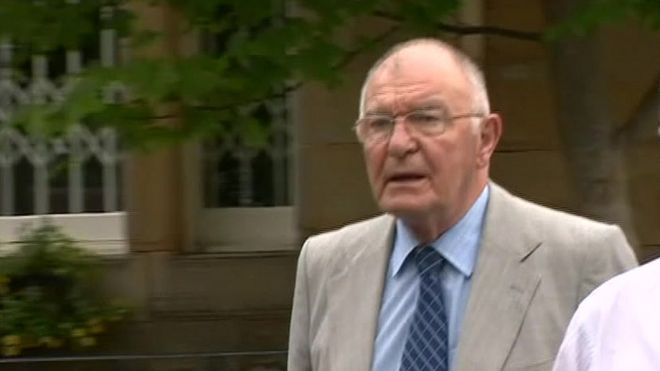
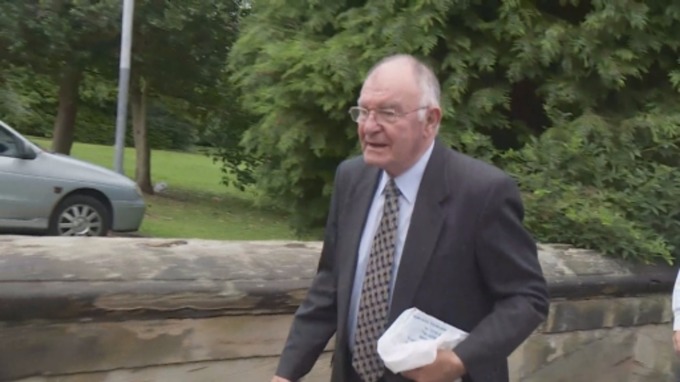
80 year old Granville Gibson pictured on his way into court Credit: ITV Tyne Tees
A retired senior clergyman has been found guilty of two historic sex offences.
After a trial at Durham Crown Court, 80 year old Granville Gibson was
convicted of two counts of indecent assault against young men.
The charges relate to his time as a vicar in County Durham between 30 and 40 years ago.
Gibson was cleared of a further 5 historic sexual offences, including 2 involving a boy.
Gibson will be placed on the sex offenders' register. He will be sentenced at a later date and was released on bail.
The judge told Gibson that all sentencing options will be open to the court, including custody.
Gibson has held a number of senior roles in the church, including Archdeacon of Auckland in the Diocese of Durham.
The court heard he was also a member of the General Synod.
Following the conviction today of the Venerable Granville Gibson on
two charges of indecent assault, we offer an unreserved apology to all
the survivors and those affected by this news.
We commend the bravery of those who brought these allegations
forward, acknowledging how difficult and distressing this would have
been.
“We are profoundly sorry for the abuse perpetrated by Mr Gibson and
remain committed to doing everything possible to ensure the wellbeing of
children, young people and adults, who look to us for respect and care.
Abuse is a terrible crime and a grievous breach of trust, which has
lifelong effects.
“Our prayers are with everyone concerned and should anyone be
affected by today’s news or want to share concerns please contact the Diocesan Safeguarding Contact Line: 0800 689 4704”
– Right Revd Paul Butler, Bishop of Durham
Anybody with concerns can contact the Diocesan Safeguarding Contact Line: 0800 689 4704.
Bishop offers 'unreserved apology' to victims of churchman found guilty of sex abuse
THE Bishop of Durham has called for a “full and independent” review
following the conviction of a former senior clergyman for historic sex
assaults.
It follows claims of a “cover up” over the Church of England’s
handling, at the time, of a complaint over the activities of the now
convicted retired cleric Granville Gibson.
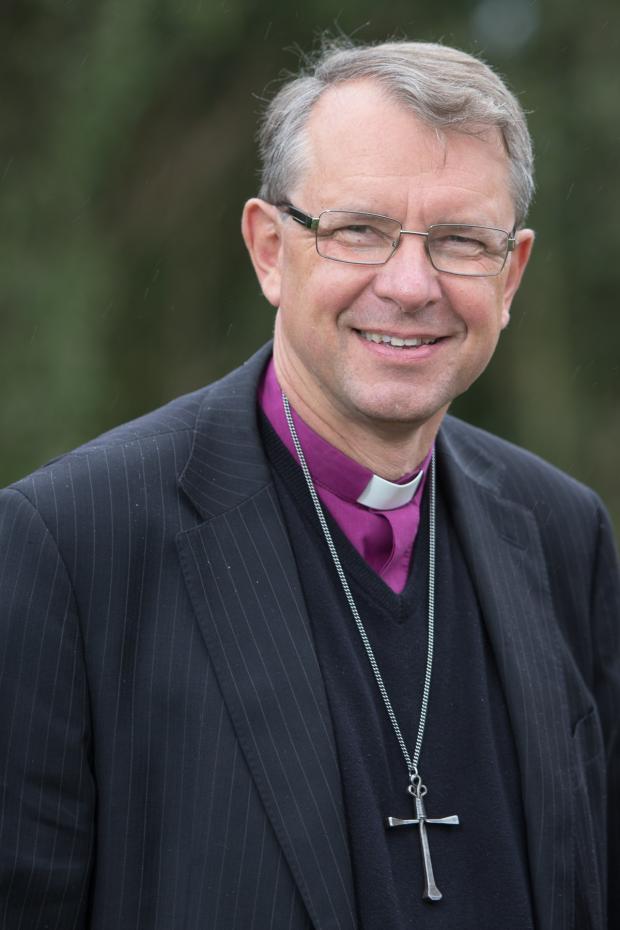
APOLOGY: Bishop of Durham Paul Butler
The 80-year-old churchman, who lives in Darlington, is facing a
possible prison sentence after being found guilty of two counts of
indecent assault at Durham Crown Court.
In the wake of those convictions, for incidents dating back to the
late 1970s and early 80s, when Gibson was vicar at St Clare’s Church, Newton Aycliffe, the Bishop of Durham, the Right Reverend Paul Butler, offered a “profound” apology to the victims.
One offence was committed on a teenager carrying out community service
work at the church, while the other conviction involved a young
clergyman in his mid-20s.
During the course of the nine-day trial, the court heard the clergyman
had reported his concerns over Gibson to the then Bishop of Durham, the
Right Reverend Dr John Habgood.
He said he was later told by Bishop Habgood that Gibson had denied the claims and that this was the end of the matter.
Gibson was later promoted under Bishop Habgood’s successor, the Right
Reverend David Jenkins, to become Archdeacon of Auckland, bringing with
it the title of the Venerable Granville Gibson.
Opening the case, last week, prosecutor Paul Cleasby told jurors: “A
clearer example of brushing something under the carpet you could not
wish to find.”
In a statement issued after the guilty verdicts, Bishop Butler said:
“Following the conviction today of the Venerable Granville Gibson on two
charges of indecent assault, we offer an unreserved apology to all the
survivors and those affected by this news.
“We commend the bravery of those who brought these allegations
forward, acknowledging how difficult and distressing this would have
been.
“We are profoundly sorry for the abuse perpetrated by Mr Gibson and
remain committed to doing everything possible to ensure the wellbeing of
children, young people and adults, who look to us for respect and care.
“Abuse is a terrible crime and a grievous breach of trust, which has lifelong effects.
“I am asking the Chair of the Diocesan Safeguarding Management Group
to commission a full and independent review of all the circumstances
surrounding this case, so that we can learn from what has happened.
“We expect that review to take place and report over the next few months.
“Our prayers are with everyone concerned and, should anyone be
affected by today’s news or want to share concerns, please contact the
Diocesan Safeguarding Contact Line: 0800-689 4704.”
Bishop Butler acts as advocate for children among Anglican bishops and chairs the Church’s National Safeguarding Committee.
The court heard that former Bishop Habgood, who went on to become
Archbishop of York, and later a life peer, was now too unwell to be
called to give evidence in the trial.
Fifty years after allegedly suffering horrific punishment at a
teenage detention centre, a Teesside pensioner is giving up on his fight
for justice.
Rod Jones, well known for his mercy missions to
help children in Romania, is one of thousands of former inmates who have
given evidence to police investigations of historic abuse at the
centres.
But
the reformed former armed robber believed the probes, including one
into Kirklevington Grange, are “taking too long” and says most of the
officers who carried out the alleged abuse are now dead.
The
69-year-old was an inmate of Medomsley, in County Durham, when he was
17, and tells of the brutal punishment he claims he suffered for
“getting into a fight” with one of the guards.
“They threw me in a laundry basket and strapped it shut,” he said.
“Then they tipped me over and over the quarter of a mile to the shower block where they put a hose in the basket.
“I could feel myself drowning. It was like water-boarding.
“I lost consciousness and the next thing I knew I was tipped out onto the floor of my cell.”
Rod, who has run the charity Convoy Aid International for 26 years,
claims he also suffered “beating after beating” at the centre.
“Once they even threw a rope into my cell and told me if I didn’t hang myself they would do it for me.”
In desperation to escape the centre Rod, from Middlesbrough , says he admitted to more than 100 offences he never committed.
“But it got me to Borstal,” he said.
The investigation into assaults on inmates at Medomsley, near Consett, is now the biggest child abuse inquiry in the UK.
And
the staggering 1,351 men who have reported being physically or sexually
assaulted while at the reform centre make up half of all alleged
victims in the country, it has been revealed.
“I’ve never got over it, but I’ve had enough now,” Rod told The Gazette.
“They’ve taken years and years over this investigation and I honesty
believe they are going to knock it about until we’re all too old.
“The
majority of prison officers who did this are now probably dead or are
in their 80s and 90s. I don’t think any of them will ever see the inside
of a court room.
“I think the whole investigation is a waste of time.”
Rod says he is now dropping a legal claim and withdrawing from the police inquiry.
He
believes the only justice he and the other victims can ever hope to
achieve is “for the Home Office to admit it happened and say ‘We’re
sorry’.